
Soba Hopping in Azumino | A Day-Trip Gourmet Drive from Omachi | Omachi Rent a Car
 Be Village
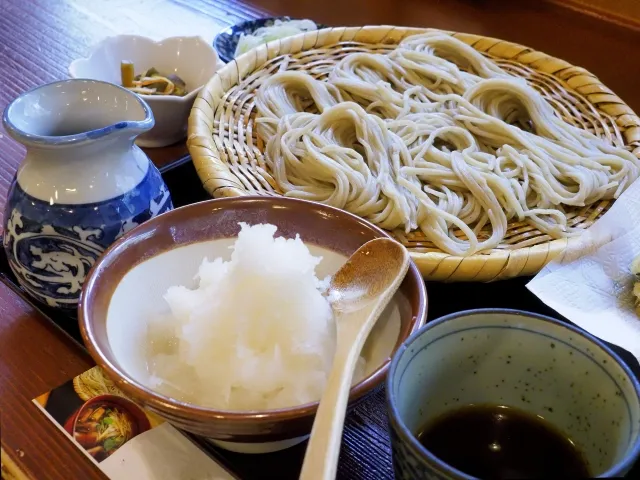
Nagano Prefecture is Japan's soba heartland, and within Nagano, Azumino is one of its most celebrated corners. Snowmelt from the Northern Alps filters slowly through the earth here before surfacing as extraordinarily pure spring water — water with just the right mineral profile for hand-rolling buckwheat noodles. Add locally grown soba flour, freshly grated Azumino wasabi, and a handful of exceptional restaurants that take all of this seriously, and you have one of Japan's great food day trips.
The catch: Azumino's best soba restaurants are scattered across a wide agricultural area, and public transport will only get you to a fraction of them. Pick up a rental car from Omachi Rent a Car (2 minutes from Shinano-Omachi Station), and the whole valley opens up. This guide covers the best soba restaurants, a complete day-trip route, and everything you need to know before you go.
📋 In This Article
Why Azumino Soba Is So Good
Three things come together in Azumino to create exceptional soba:
- 💧 Northern Alps spring water — snowmelt from the Hotaka and Jonen ranges percolates through the earth for years before emerging as ultra-soft, low-mineral water. This is the ideal water for soba-making: it binds with buckwheat flour cleanly, without competing with the grain's delicate flavour
- 🌾 Locally sourced buckwheat — Nagano's cold highland climate and wide daily temperature swings produce buckwheat with concentrated aroma and strong flavour. Many Azumino restaurants source their grain directly from specific farms and mill it themselves on stone wheels
- 🌿 Azumino wasabi — Azumino is one of Japan's foremost wasabi-growing areas. The Daio Wasabi Farm alone covers a vast area of river-fed cultivation beds. Freshly grated Azumino wasabi has a clean, delicate heat that's nothing like the paste from a tube — and it transforms a bowl of soba entirely
The Best Soba Restaurants in Azumino
① Soba Dokoro Kamijo (Hotaka)
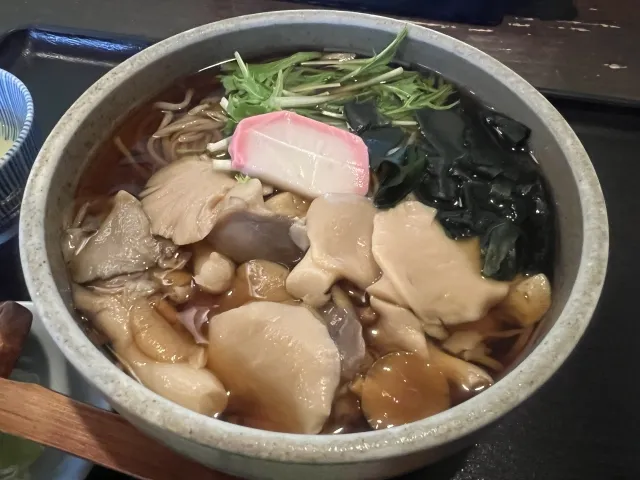
One of Azumino's most celebrated restaurants, Kamijo uses Yatsugatake-grown buckwheat stone-ground in-house and kneaded with Azumino spring water. The "Tenke Soba" (¥1,500) — topped with onsen tamago, soba-yaki miso, and other seasonal accompaniments — is the signature dish. The "Tsukeuuma" (¥1,600), served with dipping broth and sliced horsemeat, is another local favourite. The restaurant also houses a gallery of landscape photography by the owner, who is a professional photographer as well as a soba master. Come early: it fills up fast and closes when the soba runs out.
📍 Soba Dokoro Kamijo | Azumino City, Hotaka Ariake area
Popular dishes: Tenke Soba ¥1,500 / Mori ¥1,000 / Oshibori Soba ¥1,200 / Tsukeuuma ¥1,600
※ Closes when soba sells out — arrive at opening time (around 11:00 a.m.)
※ Check current hours and closed days before visiting
② Azumino Okina (Hotaka)
Perched on a gentle rise on the east side of the Takase River, Azumino Okina is a pilgrimage destination for serious soba lovers. The owner — a protégé of soba master Kunihiro Takahashi — buys buckwheat grain directly from farms in Hokkaido, Ibaraki, and Nagano, blends them himself, and mills the flour in-house. The dipping broth uses Northern Alps spring water, aged bonito from Kagoshima, true kelp from Hokkaido, and a slow-brewed soy sauce from Matsumoto — a rich, assertive broth that holds its own against the noodle's delicacy.
The menu is intentionally brief. The zaru soba is the thing to order, or the kamo seiro (cold soba with warm duck broth) if you want something more substantial. Open Wednesday to Sunday, 11:00 a.m. to 3:00 p.m.; closed Monday and Tuesday.
📍 Azumino Okina | Azumino City, Hotaka Kashiwabara
Hours: 11:00–15:00 (closes earlier when soba sells out) | Closed: Mon & Tue
Popular dishes: Zaru soba / Kamo seiro (duck seiro)
Official website
③ Soba Dokoro Kurumaya (Hotaka)
Kurumaya is known for one thing that sets it apart from most Azumino soba restaurants: kurumi soba — noodles served with a sweet, rich walnut dipping sauce. Walnuts are a traditional Shinshu mountain ingredient, and Kurumaya's version, including a richer "concentrated kurumi soba," delivers a depth of nutty flavour you won't find at most other restaurants. A distinctive and very Shinshu experience.
📍 Soba Dokoro Kurumaya | Azumino City, Hotaka area
Popular dishes: Kurumi soba / Noko kurumi soba (concentrated walnut)
※ Check hours and closed days before visiting
④ Ikkyuan (Hotaka)
Conveniently located near Hotaka Station, Ikkyuan is one of the most accessible of Azumino's well-regarded soba restaurants. The "Alps Wasabi Soba" — topped with pickled wasabi stems — is the restaurant's most distinctive offering, and a direct celebration of the area's wasabi heritage. The set menu combining soba with Shinshu salmon donburi is also popular. Good for visitors without much time to spare, or as a first stop before heading to more remote restaurants.
📍 Ikkyuan | Azumino City, Hotaka (near Hotaka Station)
Popular dishes: Alps Wasabi Soba / Soba + Shinshu Salmon Donburi set
※ Check hours and closed days before visiting
⑤ Soba Dokoro Shimizuan (Toyoshina)
A quieter, more hidden option in the Toyoshina area south of Hotaka — described as a restaurant where you can enjoy "the original scenery of Azumino in all four seasons" alongside fragrant hand-rolled soba. For visitors doing a longer loop through the valley, Shimizuan works well as a second stop after a Hotaka restaurant.
📍 Soba Dokoro Shimizuan | Azumino City, Toyoshina area
※ Check hours and closed days before visiting
⚠️ Important notes for all restaurants
· Most Azumino soba restaurants close when the daily soba runs out — sometimes before 1:00 p.m. on busy days. Arrive at opening time (around 11:00 a.m.) to be safe
· Some restaurants are cash only. Check each restaurant's website or call ahead
· Weekends, Golden Week, and autumn foliage season are very busy. Weekday visits are strongly recommended if possible
What Else to See Along the Way
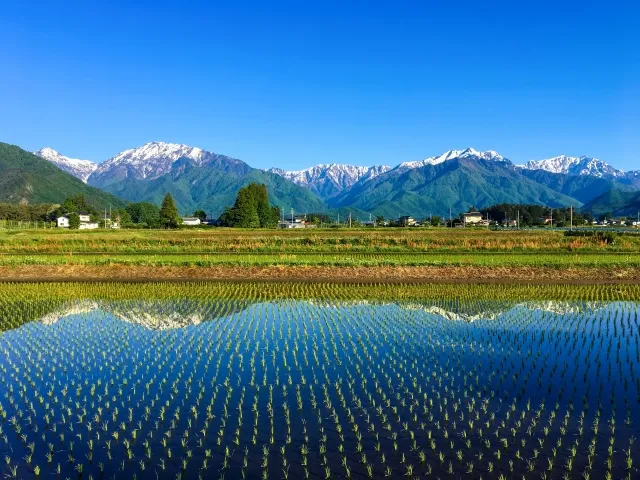
Azumino has enough to fill a full day beyond just soba. These spots pair naturally with a restaurant circuit:
- 🌿 Daio Wasabi Farm (Azumino City, Hotaka) — Japan's largest wasabi farm, fed by Northern Alps spring water. Free entry to the grounds. A vivid, photogenic landscape of cultivation beds and clear channels, with wasabi ice cream and products for sale. A perfect stop to understand the wasabi you're eating with your soba
- 🎨 Rokuzan Art Museum (Azumino City, Hotaka) — Nagano's oldest art museum, dedicated to sculptor Ogiwara Morie. A beautiful ivy-covered brick building in a quiet garden. Compact and easily combined with a restaurant visit nearby
- 🌊 Nishina Three Lakes (Omachi City) — the three alpine lakes (Kizakiko, Nakazunako, Aokiko) lie between Omachi and Azumino. A scenic lakeside drive works beautifully as an opening or closing segment of the day
- 🌾 Azumino farm roads — the back roads between Hotaka and Toyoshina pass through some of the most quietly beautiful agricultural countryside in Japan. In autumn, golden rice fields backed by the white peaks of the Hotaka range are genuinely extraordinary
Day-Trip Driving Itinerary from Omachi
🗓️ Soba and Wasabi Day Trip
- 9:00 Pick up rental car at Omachi Rent a Car (2-min walk from Shinano-Omachi Station)
- 9:30 Drive south along the Nishina Three Lakes (scenic lake-road opening)
- 10:30 Daio Wasabi Farm — explore the grounds before restaurants open
- 11:00 Azumino Okina or Soba Dokoro Kamijo for the first soba of the day (arrive at opening for best chance of a seat)
- 13:00 Rokuzan Art Museum and Hotaka Shrine — a gentle post-lunch walk
- 14:30 Soba Dokoro Shimizuan or Kurumaya for a second bowl (smaller portion — the soba-hopping way)
- 16:00 Slow drive back through Azumino's farm roads toward Omachi
- 17:00 Optional: Omachi Onsen Village for a hot spring before returning (approx. 30–40 min from Toyoshina)
- 18:00 Return car at Omachi Rent a Car
| Leg | Approx. drive time |
|---|---|
| Shinano-Omachi → Daio Wasabi Farm | ~30–40 min |
| Daio Wasabi Farm → Hotaka restaurants (Okina / Kamijo) | ~10–15 min |
| Hotaka → Toyoshina area (Shimizuan / Kurumaya) | ~10–20 min |
| Toyoshina → Omachi Onsen → Shinano-Omachi | ~40–50 min |
Soba-Hopping Tips
- 🕙 Arrive at opening time (11:00 a.m.) — Azumino's most popular restaurants fill up within 30 minutes of opening and can sell out before 1:00 p.m. on busy days. Plan your first stop to coincide with opening
- 🍜 Order one bowl per restaurant and visit two or three — soba portions in Japan are intentionally sized for this. Ordering a single zaru soba at two or three restaurants is completely normal and is how many locals approach the valley
- 🌿 Ask for freshly grated wasabi if it's available — some restaurants grate to order at the table. Fresh Azumino wasabi has a fleeting, aromatic heat that disappears within minutes of grating — it's a completely different ingredient from pre-made wasabi paste
- 🍂 Visit in late October or November for new-crop soba (shinSoba) — after the buckwheat harvest, restaurants switch to freshly milled flour. The aroma is noticeably more intense. Late October to November is by many accounts the best time of year for soba across all of Shinshu
- 💴 Carry cash — a number of soba restaurants in the Azumino area do not accept cards. Confirm payment methods when you call ahead or check the restaurant's website
- 🚗 A rental car is the only practical way to do this properly — the restaurants are spread across Hotaka, Toyoshina, Sango, and Akashina districts. Public transport connects the train stations but not the restaurants themselves. With a car, you can cover the whole valley in a single day
Book Your Rental Car at Omachi Rent a Car
Shinano-Omachi Station is the perfect starting point for an Azumino soba day trip — about 30–40 minutes by car from the Hotaka restaurant cluster. Omachi Rent a Car is a 2-minute walk from the station. Step off the train, pick up your car, and let the soba trail begin.
🚗 Omachi Rent a Car
📍 Inside Takenoya Inn, Omachi City, Nagano — 2-minute walk from Shinano-Omachi Station
🕐 For hours and rates, visit our Cars & Deals page
💳 Online credit card payment only (VISA / Mastercard / AMEX / JCB / Diners Club)
How it works: ① Submit booking form → ② Confirmation email with payment link → ③ Pay online → ④ Pick up your car at our shop
Summary
- Azumino's soba owes its quality to three things: Northern Alps spring water, stone-ground local buckwheat, and freshly grated Azumino wasabi
- The top restaurants are Soba Dokoro Kamijo, Azumino Okina, Kurumaya, Ikkyuan (Hotaka area) and Soba Dokoro Shimizuan (Toyoshina area)
- Arrive at opening time (11:00 a.m.) — popular restaurants sell out before early afternoon on busy days
- Late October to November is the best time of year for soba across Shinshu — new-crop flour, maximum aroma
- Combine with Daio Wasabi Farm, Rokuzan Art Museum, and the Nishina Three Lakes for a full and varied day
- Shinano-Omachi to the Hotaka restaurant area is about 30–40 minutes by rental car — Omachi Rent a Car is the ideal starting point
Omachi Rent a Car is steps from Shinano-Omachi Station. We hope to be part of your Azumino soba day.